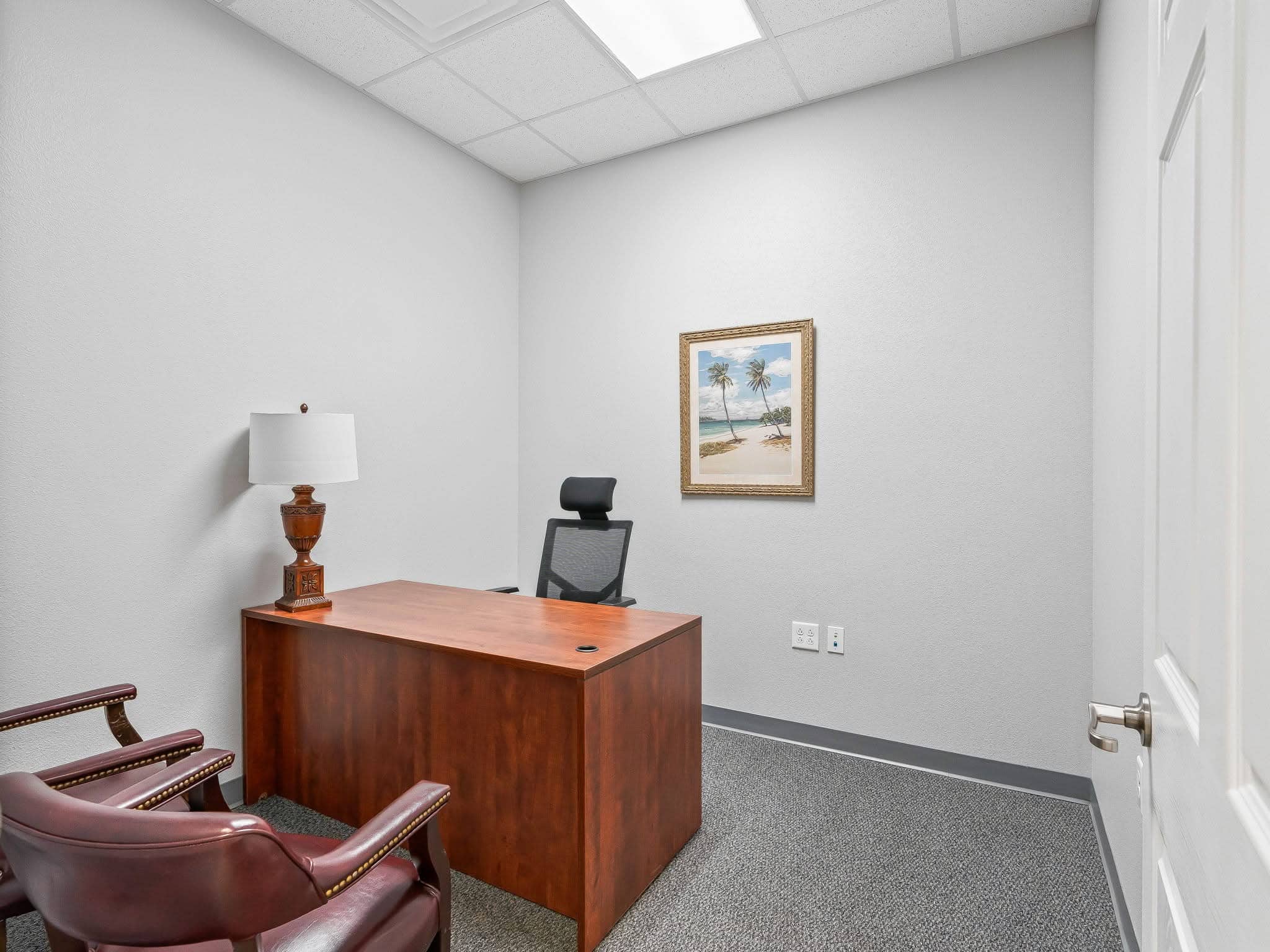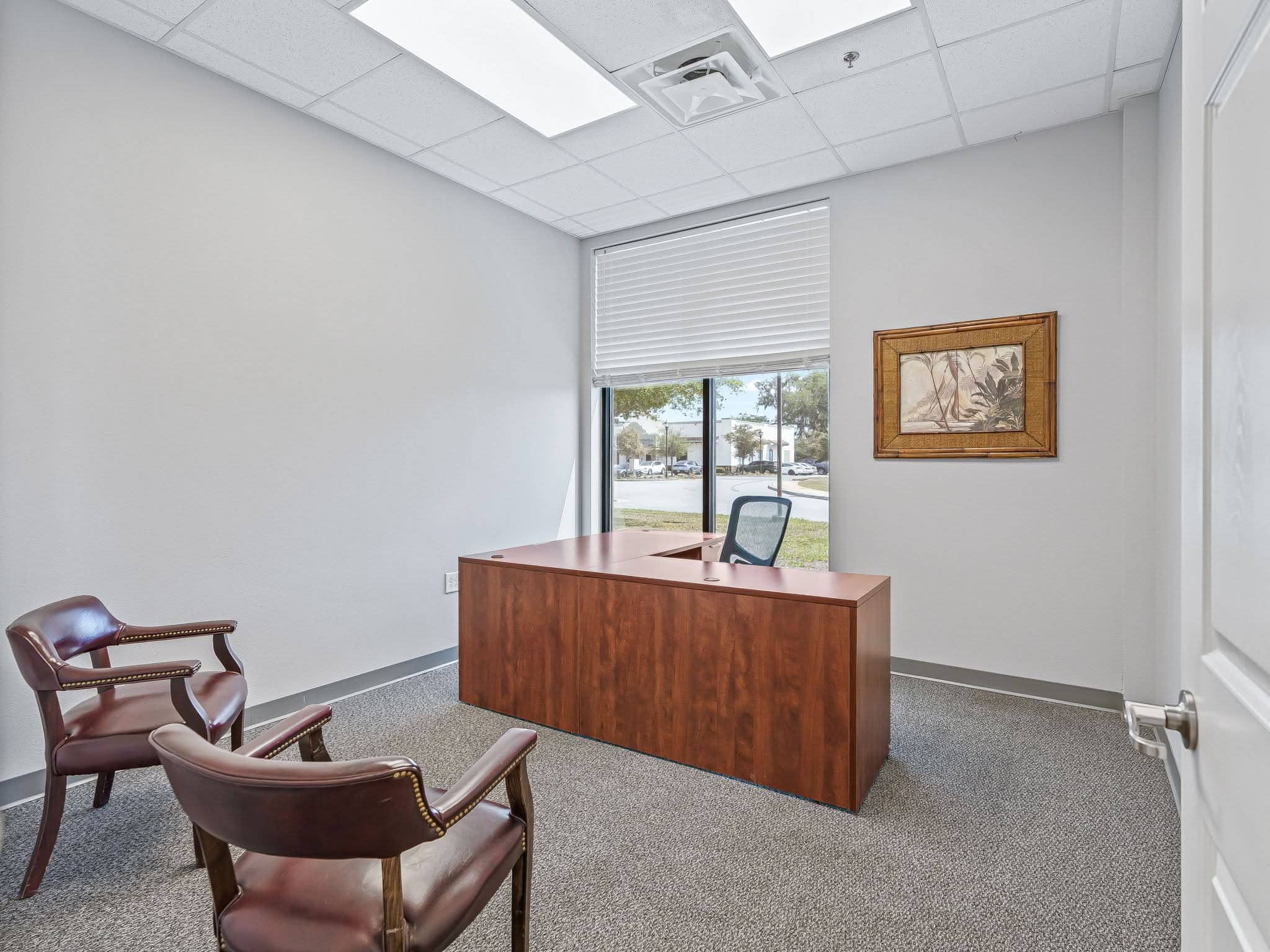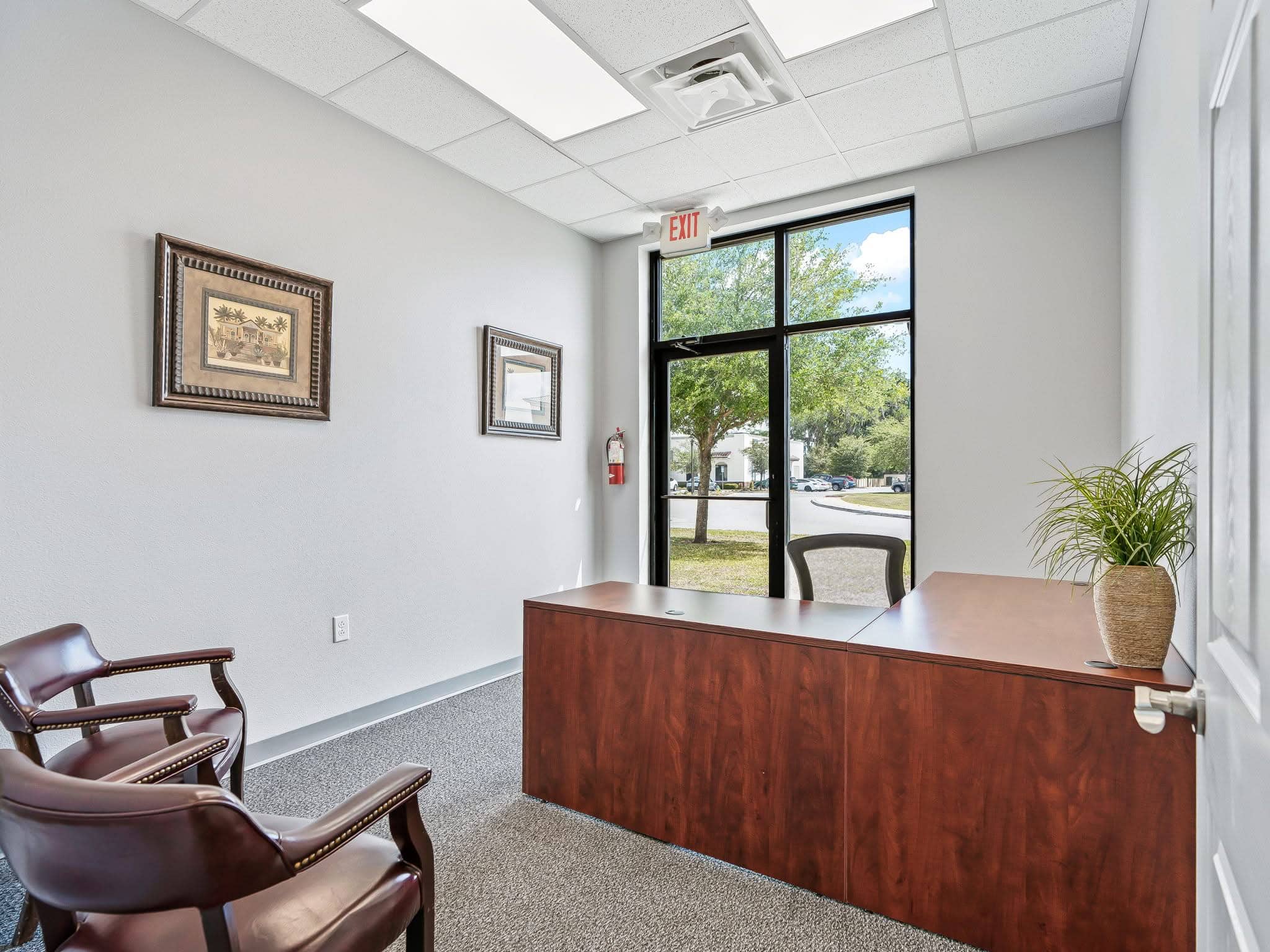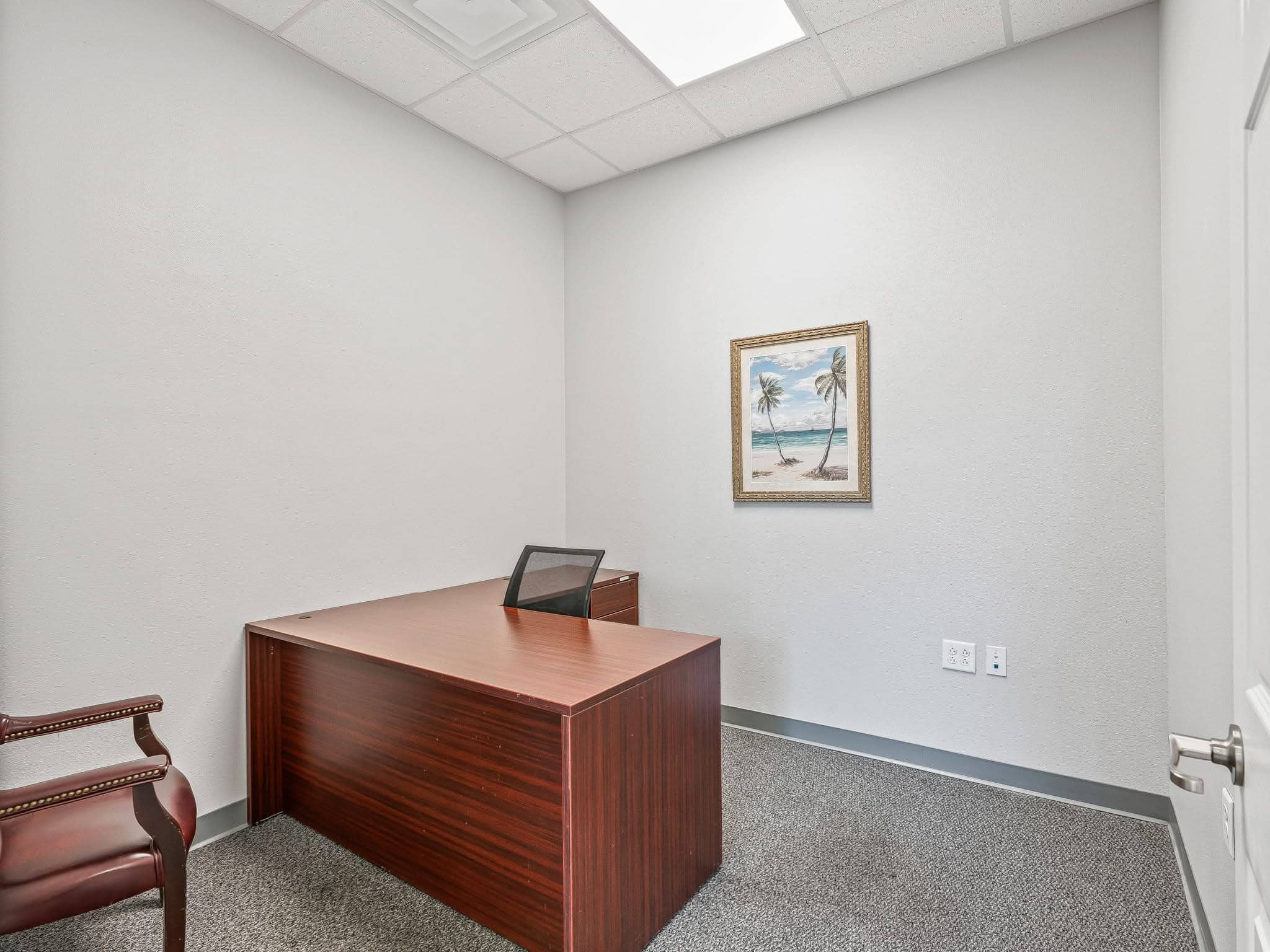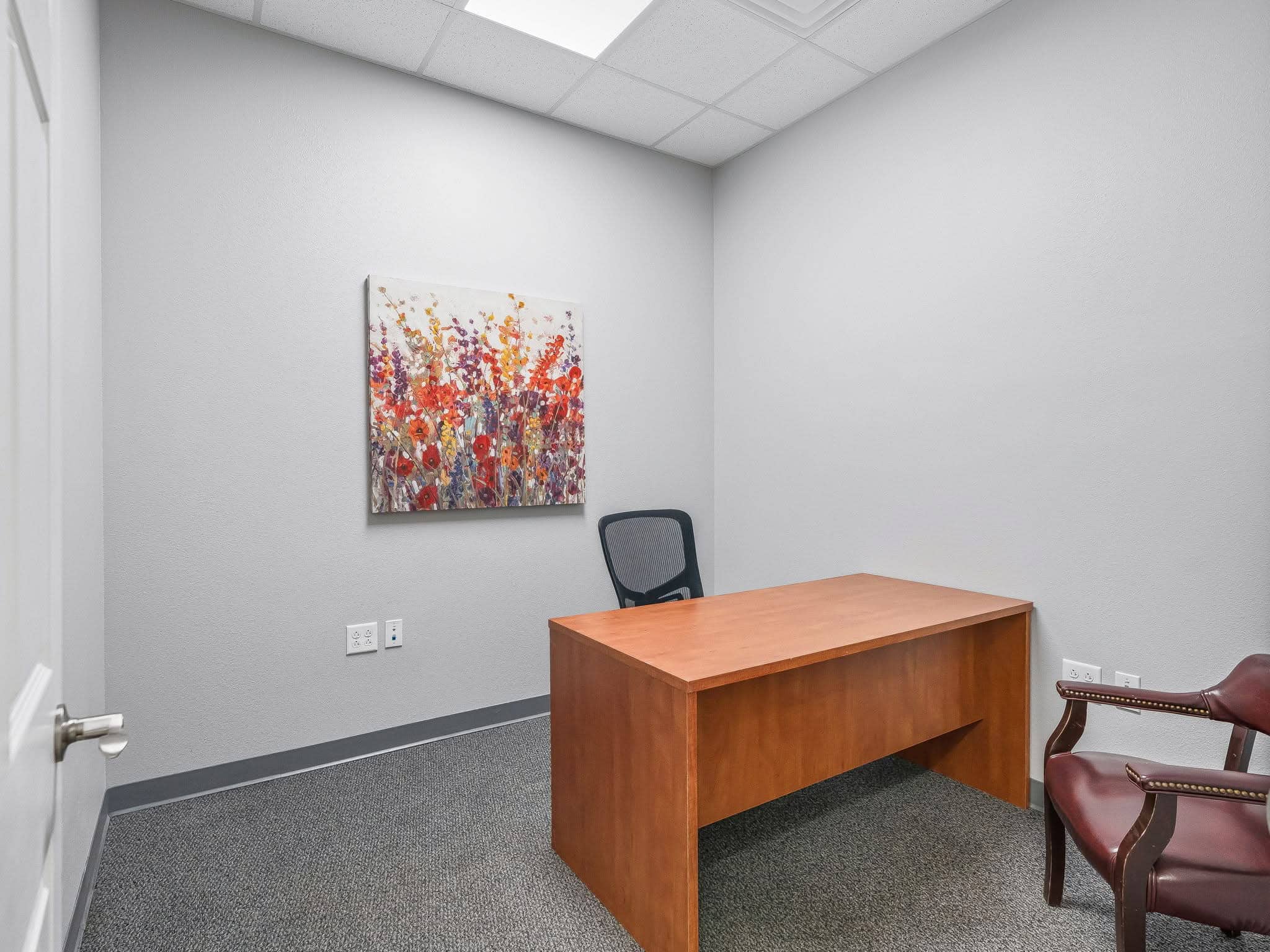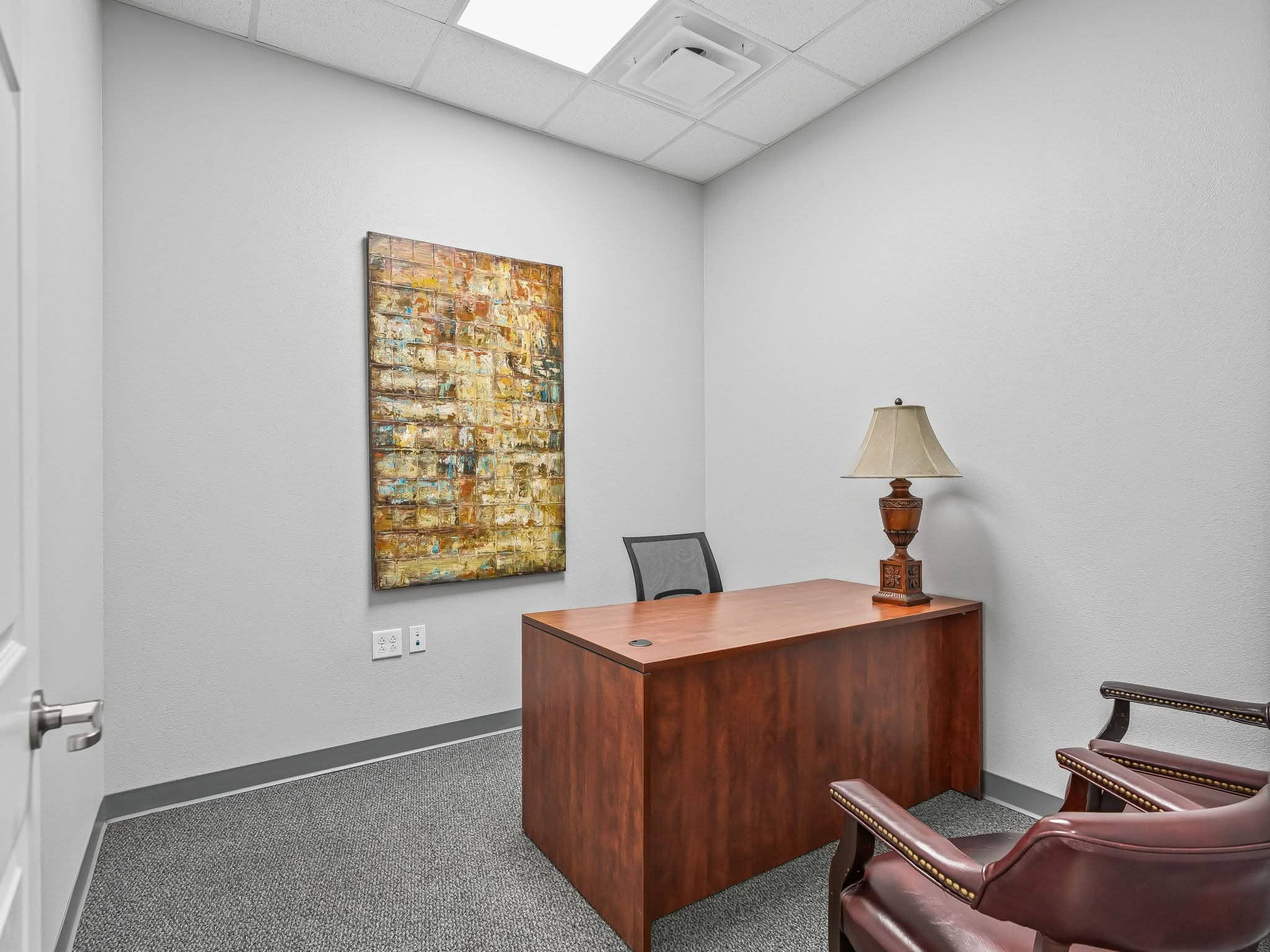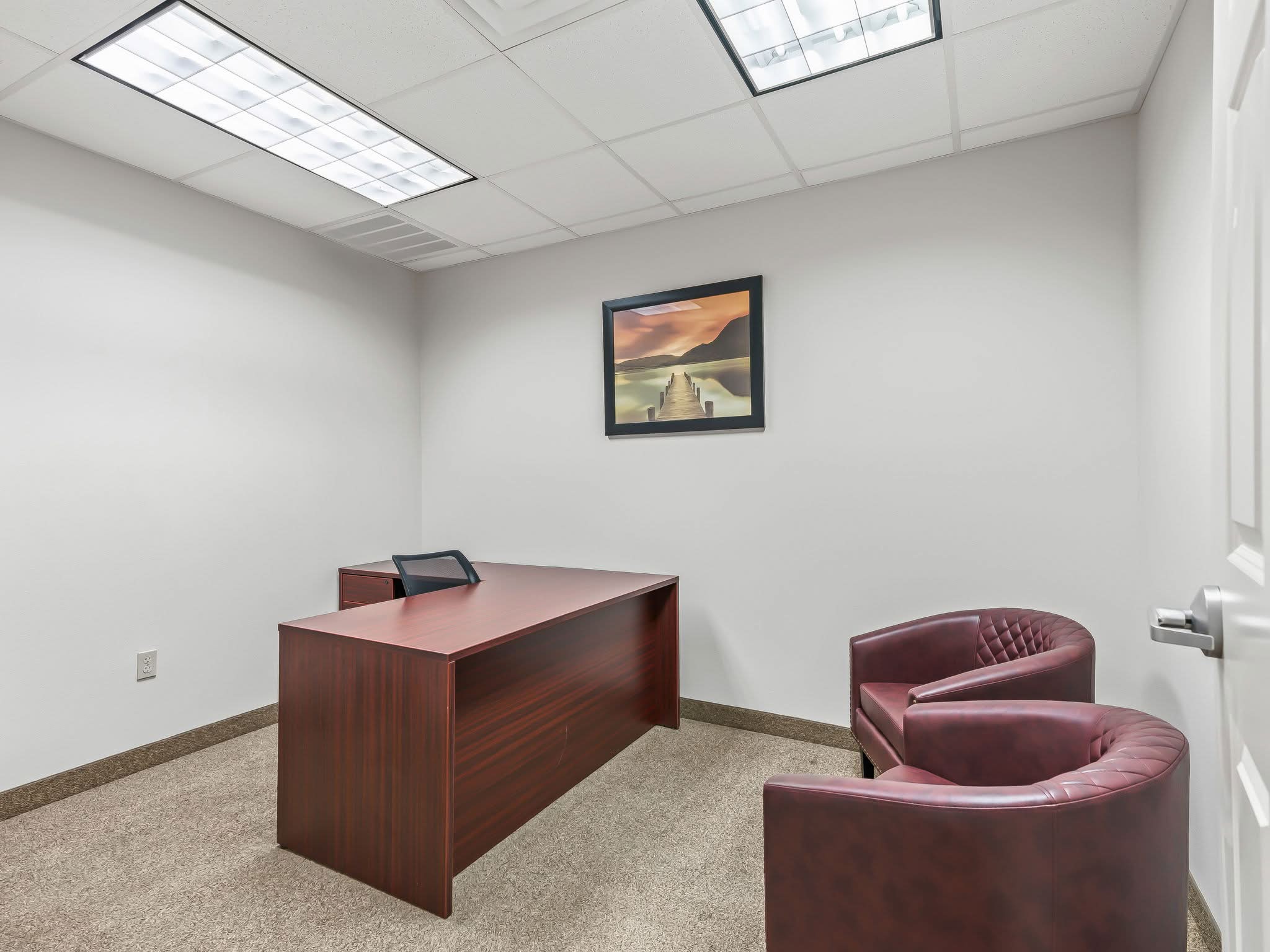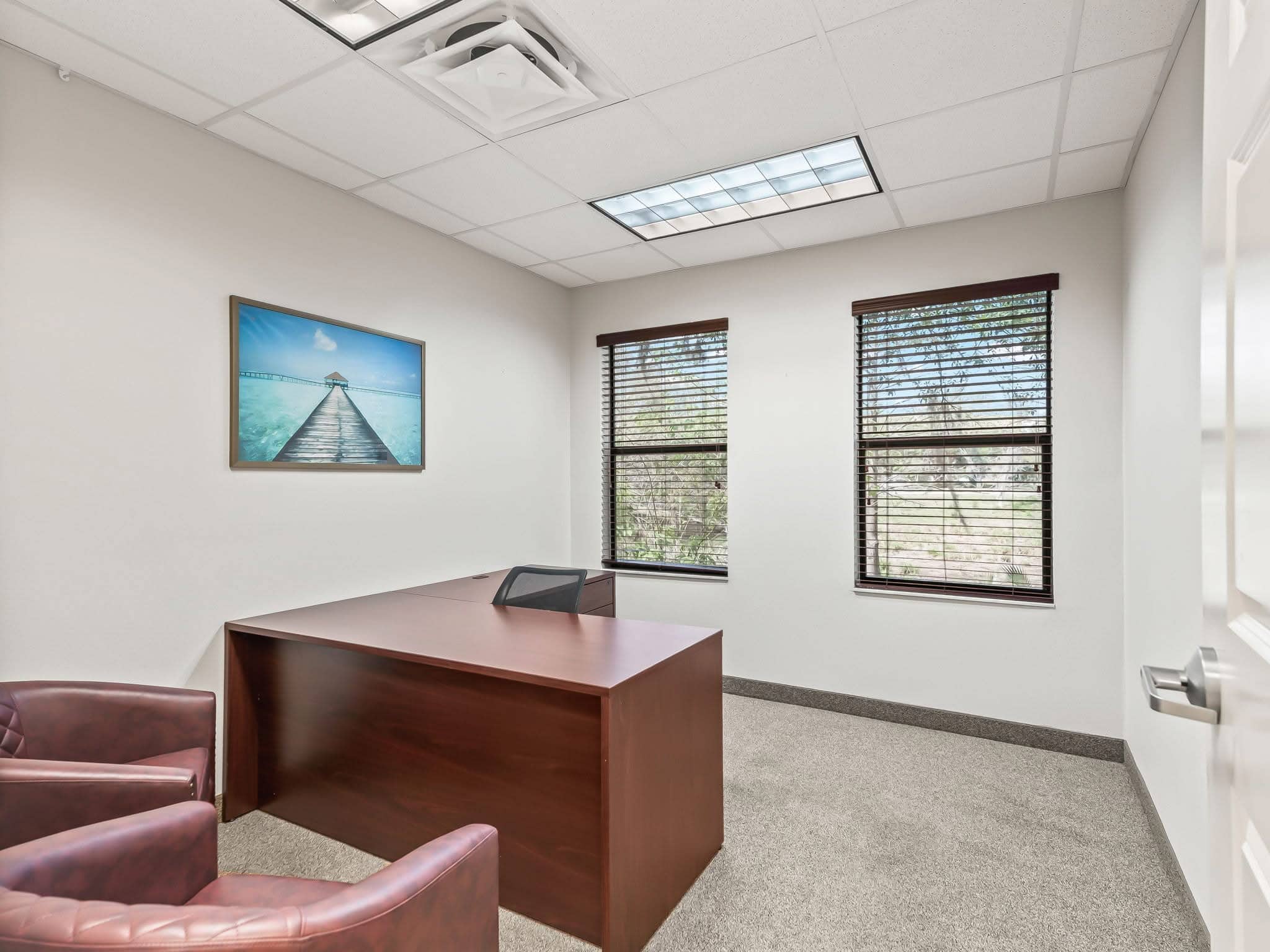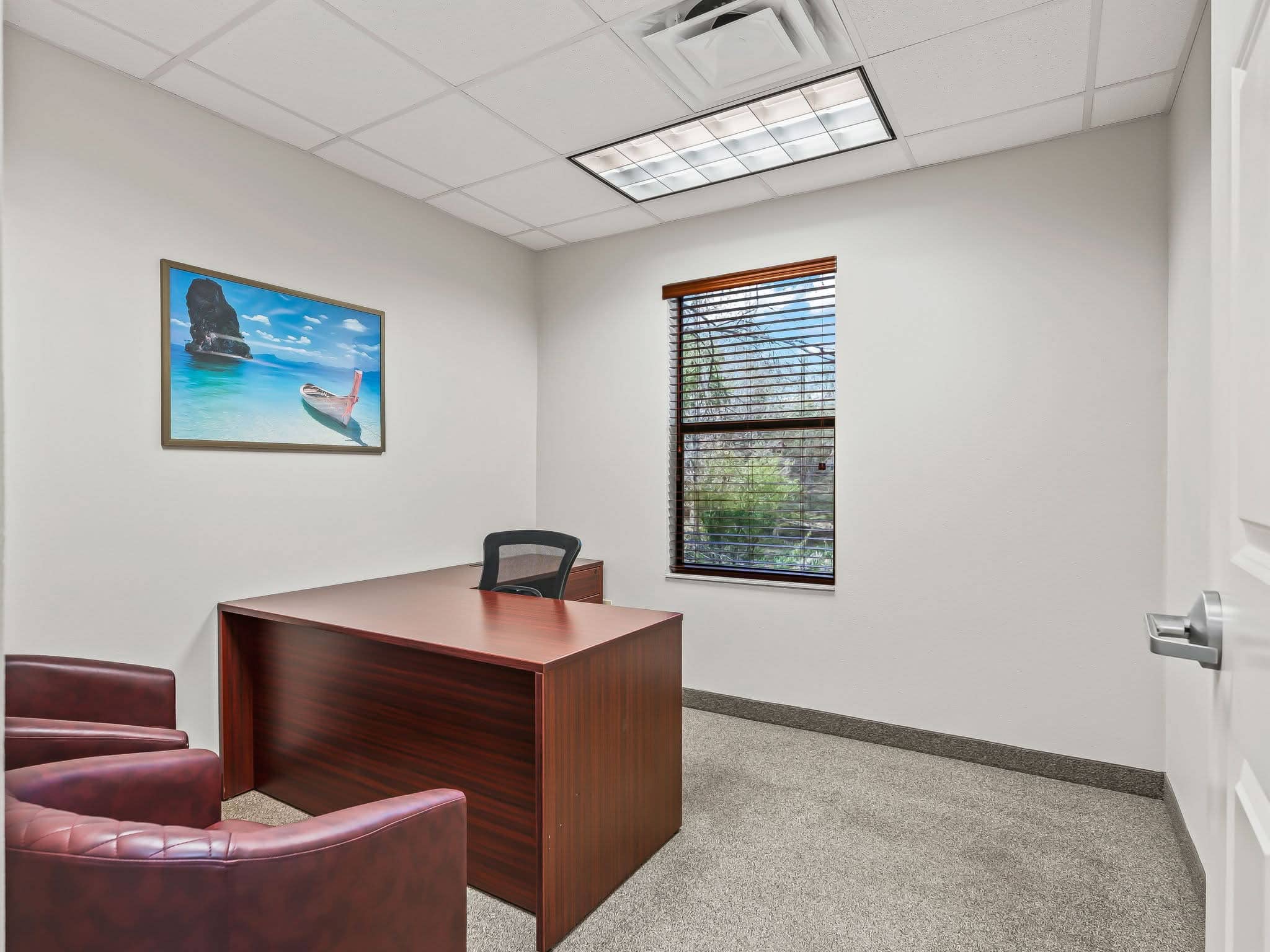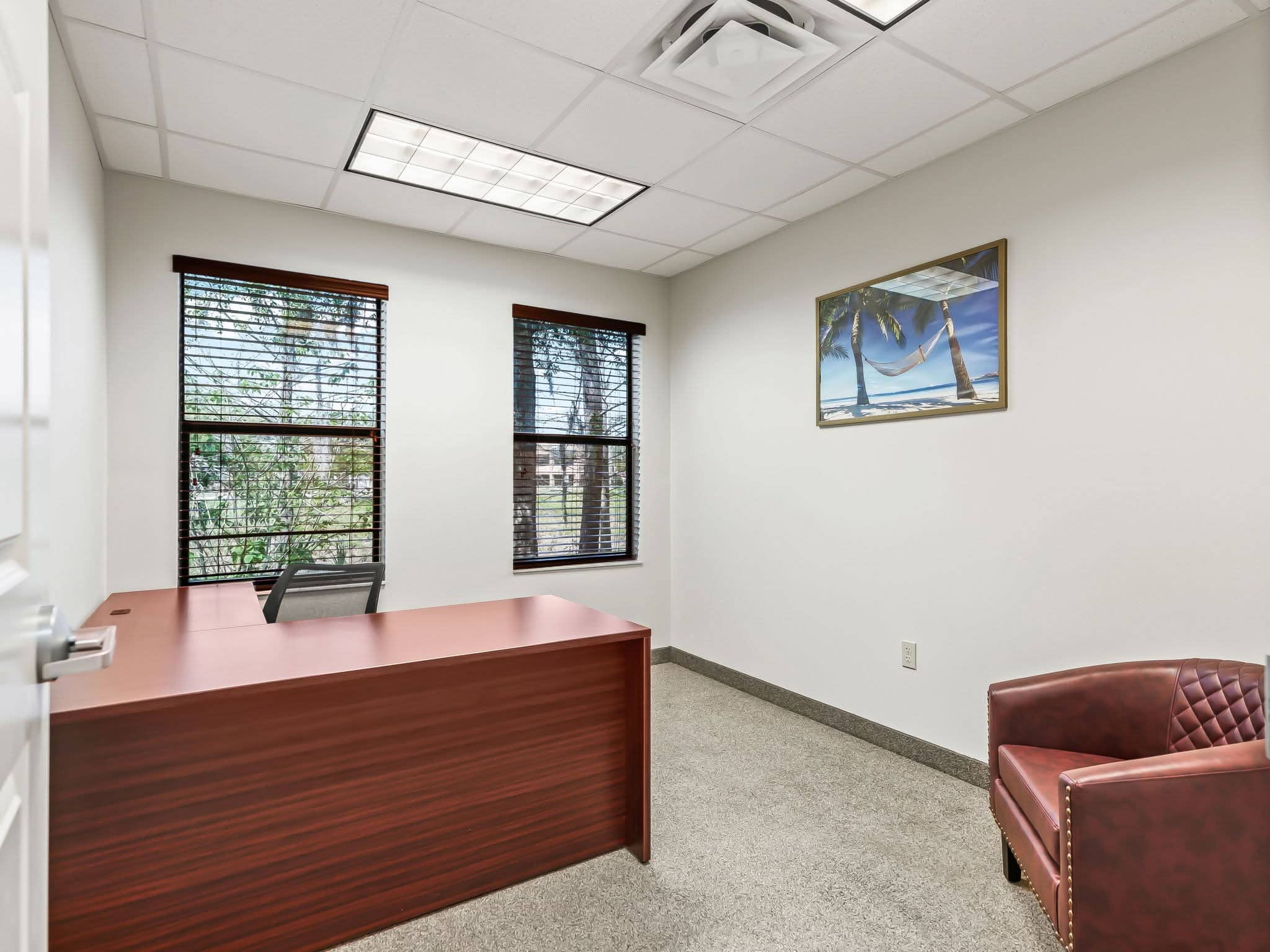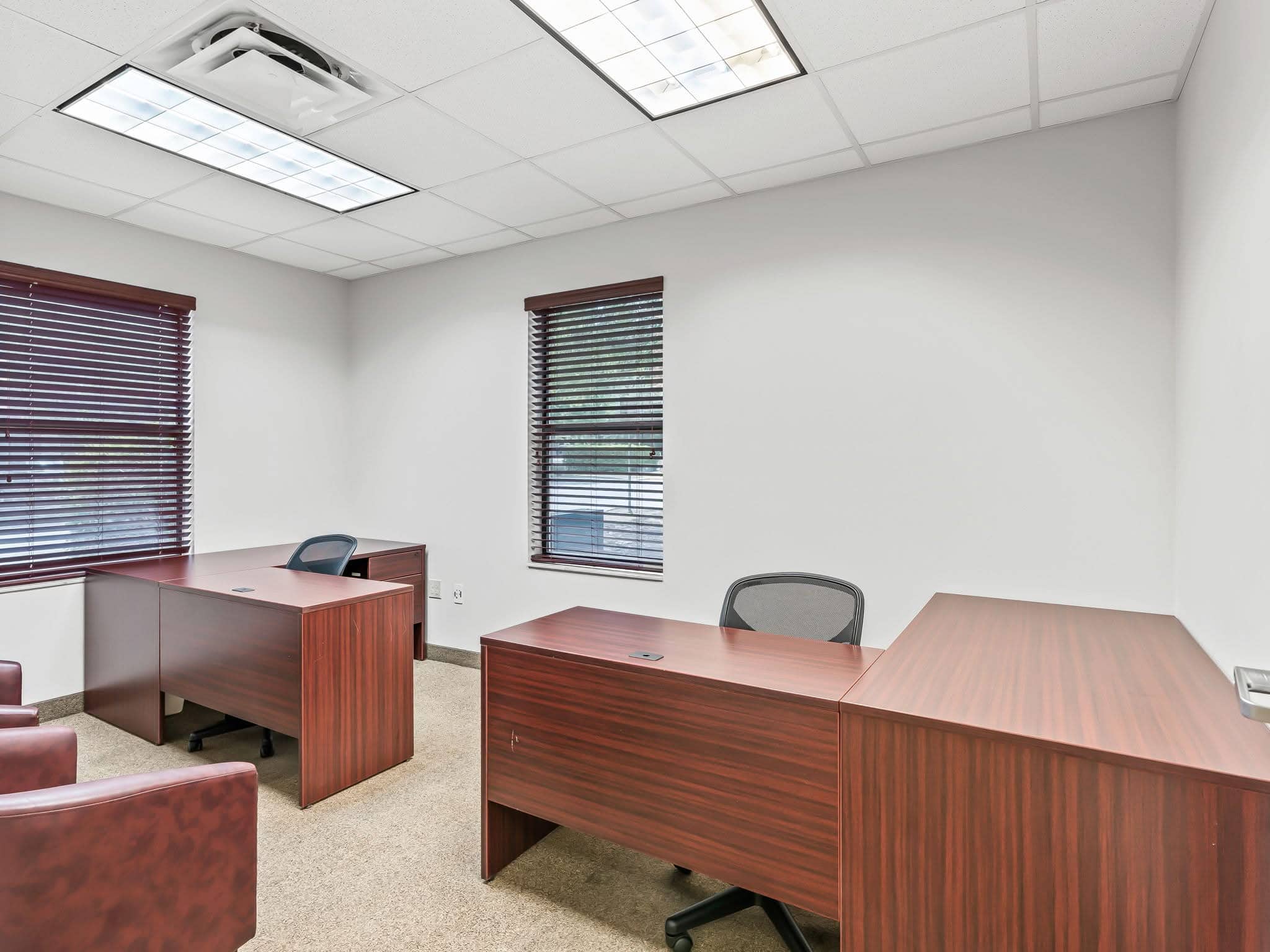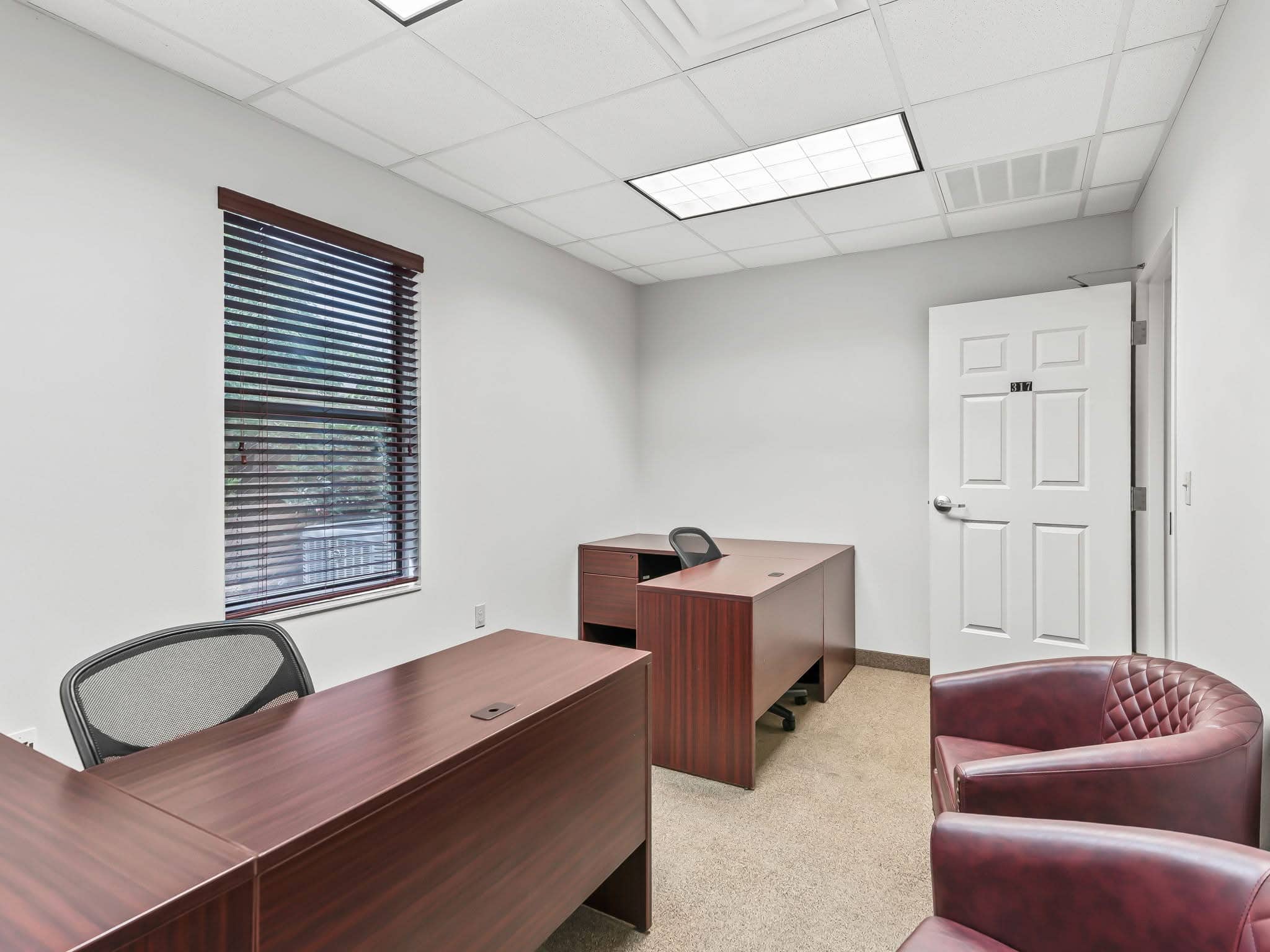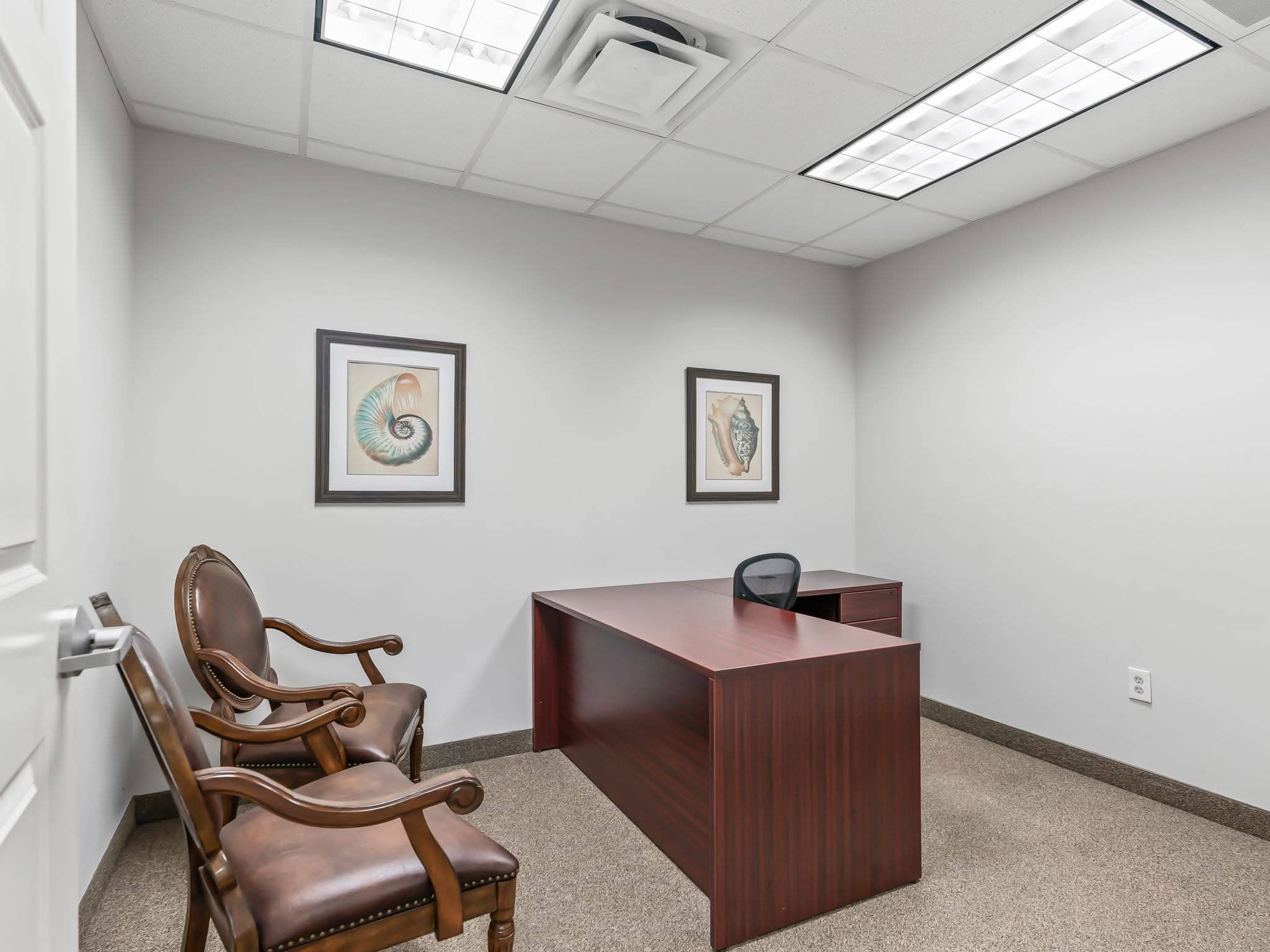
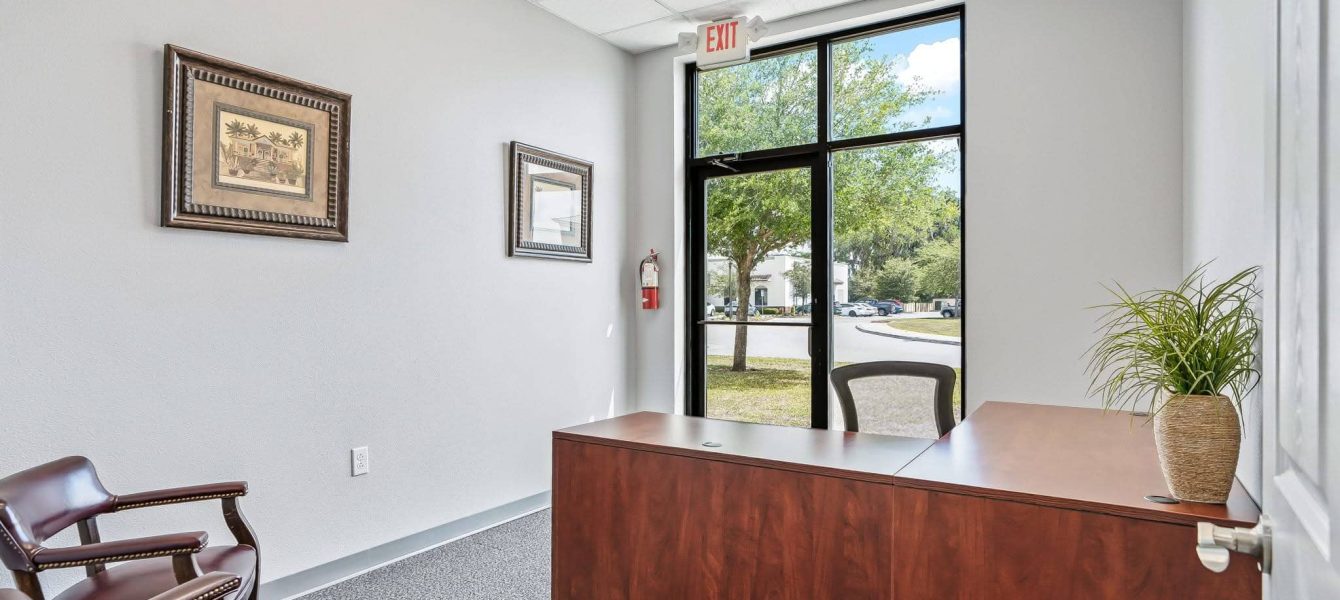
You have built a career worth taking seriously. Your office should say the same thing. Premier Office Center executive suites give you a prestigious, fully furnished private workspace at any of our 3 locations across North Central Florida, all-inclusive on a flexible monthly membership.
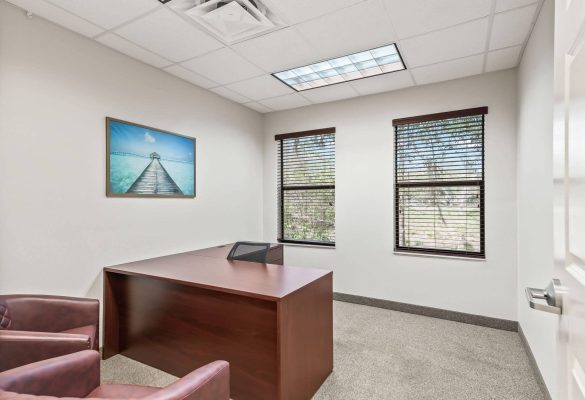
For established professionals who have outgrown working from home and do not want the overhead of a full commercial lease, a Premier executive suite is the answer. You get a private, professional office that reflects the level of your work, the amenities to run your business without friction, and a business address that belongs on your card.
Move in ready. No setup. No surprises. Just a space that works as hard as you do.
An executive office suite at Premier Office Center is a fully furnished, all-inclusive private office available in medium and large sizes at all 3 of our North Central Florida locations: Wildwood, Ocala. Every suite includes an on-site receptionist, secure high-speed Wi-Fi, monthly conference room credits, print allowance, professional business address, mail handling, coffee bar, and secure 24/7 access.
You are not a startup trying to save money on overhead. You are an established professional with clients who expect a certain level of polish, a practice that demands focus and privacy, and a reputation you have spent years building.
But right now, your workspace is not keeping up.
You are paying for 1,000 square feet you do not need, absorbing overhead that has no business living inside a solo practice, and tied to obligations that grow as your business changes.
It worked for a while. But your clients deserve better than a video call in front of your bookshelf, and so do you. The line between work and the rest of your life has disappeared.
You tried the budget option. The furniture was worn. The space looked like it had seen better days. And every client who walked in made you wish you had chosen differently.
Your client walks into Premier Office Center. The lobby is clean and modern. A receptionist greets them by name, offers them a seat, and lets you know they have arrived. You step out of your private office, extend your hand, and lead them into a space that communicates exactly what you have built: a serious, established, professional practice.
No apologies for the noise. No explaining the home office setup. No meeting in a coffee shop because you did not have anywhere better to go.
Just you, your client, and a space that does half the selling before you open your mouth.
“ Your office is the first thing your client judges. Make sure it says what you want it to say. “
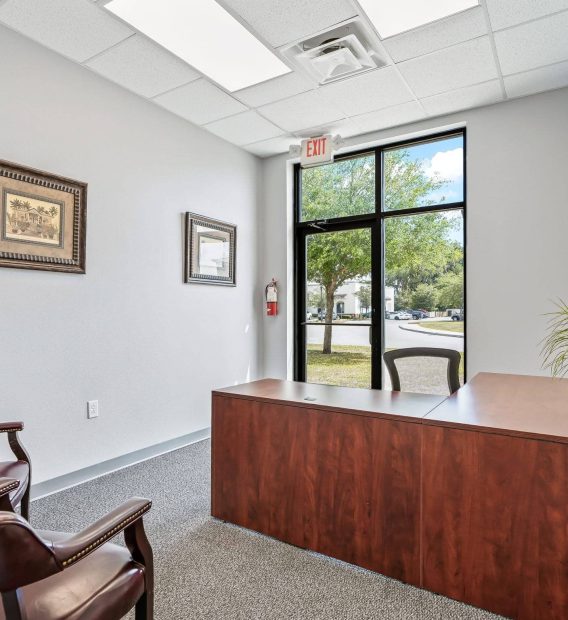
Premier executive suites are available in two sizes. Both are fully furnished, both include the full amenity package, and both give you a private, prestigious workspace at Premier Office Center. The difference is in how much space you need and how often you use the conference rooms.
Print Allowance (B&W): 300 copies/month
Print Allowance (Color): 60 copies/month
Conference Room Credits: 4 included/month
All other amenities fully included
MOST POPULAR
Print Allowance (B&W): 600 copies/month
Print Allowance (Color): 120 copies/month
Conference Room Credits: 8 included/month
All other amenities fully included
Not sure which size is right for your practice? Bring your questions on the tour. We will help you find the fit.
Every Premier executive suite includes the full amenity package. One flat monthly rate. No add-on fees for the essentials. Everything you see below is included from day one.
Premium modern furniture selected for a professional environment. Move in on your first day and get straight to work.
Your clients are greeted professionally the moment they walk through the door. Your receptionist handles arrivals and front-desk representation.
Business-grade, dedicated high-speed internet for your office. Reliable and fast for video calls, document management, and everything in between.
Included credits to book the conference rooms as part of your membership. Medium suites include 4 credits per month. Large suites include 8 credits per month.
Monthly black-and-white and color printing included in your suite. Medium: 300 B&W / 60 color. Large: 600 B&W / 120 color.
Scan documents directly to your inbox from the shared business center. No per-page charge. No limits.
Use the Wildwood, Ocala address as your official business address across all platforms: your website, Google Business Profile, business cards, email signature, and any professional correspondence.
Receive mail and packages at your professional address. Everything is held securely at the front desk until you collect it.
Coffee, tea, and water available throughout the day for you and your clients. A detail that makes every visit feel considered.
Real support from real people, right here. Any issue with the building or your space is handled quickly and professionally.
Your name in the lobby directory. Visible from day one to every person who walks through the front door.
Access your office any time, any day. Early mornings, late evenings, weekends. Your schedule runs the show.
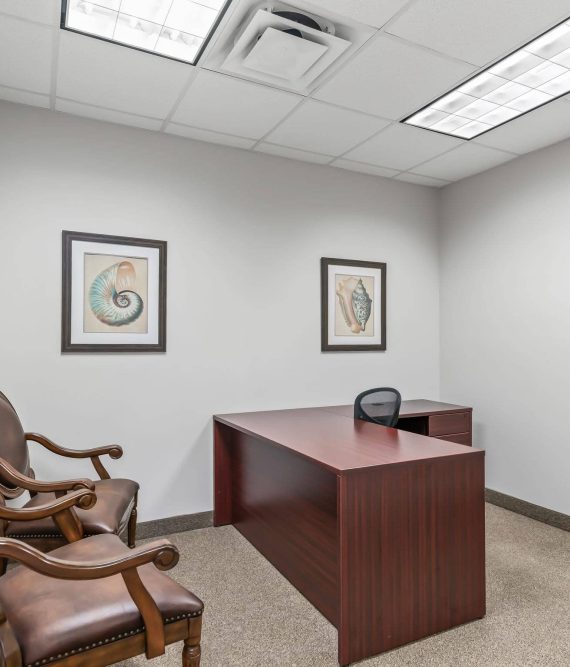
Premier executive suites are designed for established professionals who need a private, prestigious workspace without the overhead of a dedicated commercial lease. Our executive suite members include:
If your clients judge your credibility partly by where you operate, an executive suite at Premier is built for you.
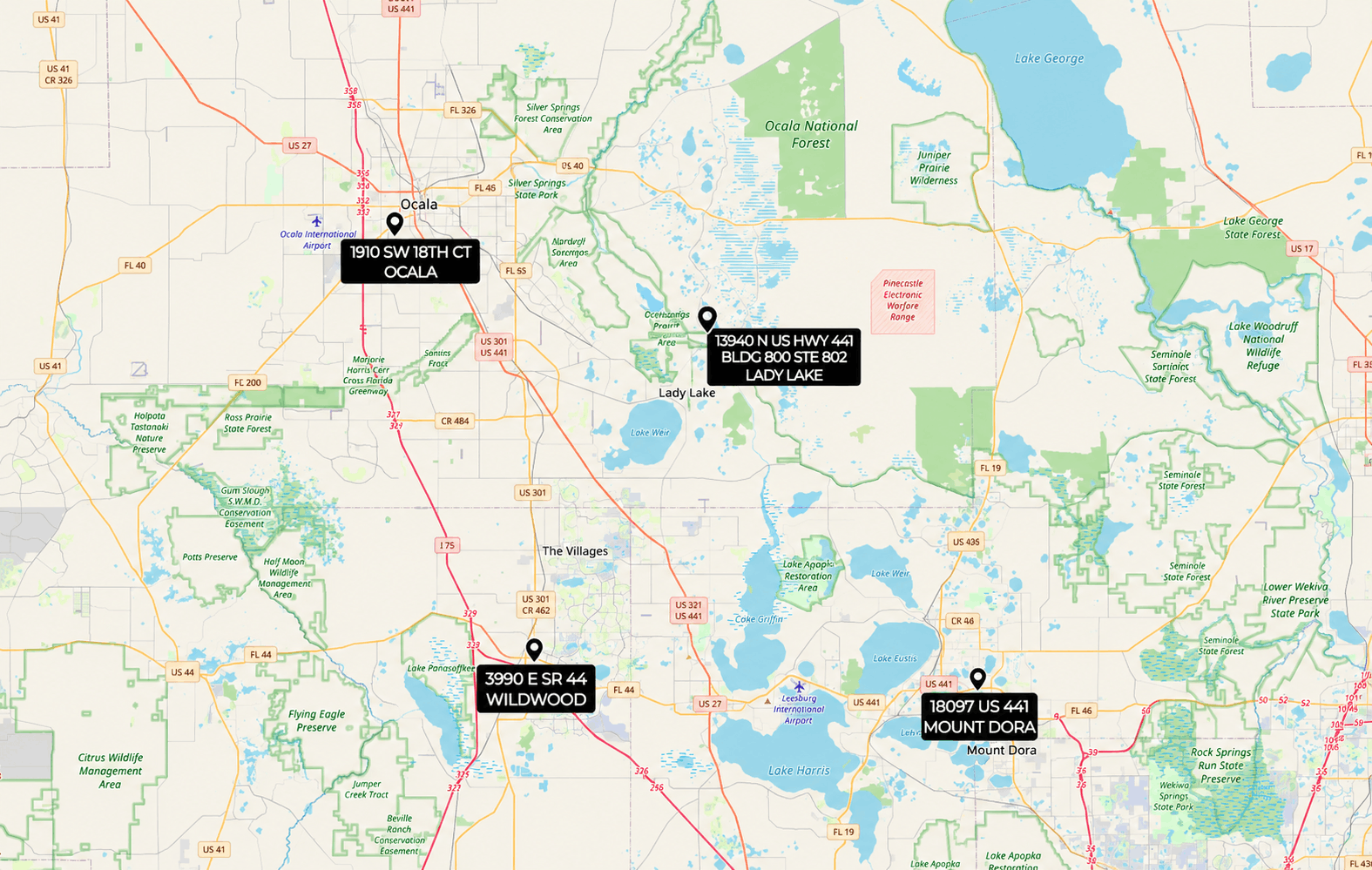
Premier Office Center provides executive office suites in key locations across North Central Florida, giving your business a professional presence where it matters most.
Our Wildwood executive offices, located near Brownwood, place you close to The Villages and a thriving business community.
Our Ocala executive offices, located near SR 200, offer convenient access for professionals across Marion County.
Each location is designed to help you meet clients, grow your brand, and operate with confidence in a polished, professional environment.
Premier executive suites fill quickly. If you are ready to move your practice into a space that reflects your professionalism and supports the way you work, the best next step is a tour.
We will show you the medium and large suite options, walk you through every amenity, and send you home with a complimentary day pass so you can experience the space before you commit.
Every executive suite includes a fully furnished private office, on-site receptionist, secure high-speed Wi-Fi, monthly conference room credits, print allowance, unlimited scan-to-email, professional business address, mail and package handling, complimentary coffee bar, on-site management, lobby directory listing, and secure 24/7 access. All amenities are included in one flat monthly rate.
Both the medium and large executive suites include the full amenity package. The difference is in the size of the office space and the monthly allowances. Medium suites include 4 conference room credits per month and a print allowance of 300 black-and-white and 60 color copies. Large suites include 8 conference room credits per month and a print allowance of 600 black-and-white and 120 color copies.
Premier Office Center executive suites are offered on flexible monthly membership terms. Contact us during your tour for details on available membership options.
Yes. Every executive suite comes fully furnished with modern, premium furniture. You can move in on your first day without purchasing or arranging any furniture or equipment.
Yes. Every executive suite membership includes use of one of three Premier Office Center address’s as your official business address for your website, business cards, Google Business Profile, and all professional correspondence.
Yes. Premier Office Center has 3 locations across North Central Florida: Wildwood (just minutes from The Villages), Ocala (serving Marion County), and Mount Dora (serving Lake County). The locations are easily accessible for professionals throughout The Villages, Lady Lake, Leesburg, and the surrounding areas of Sumter, Marion, and Lake County.
Yes. An on-site receptionist is included with every executive suite membership. Your clients are greeted professionally at the front desk.